

Ask AI Which Pressure Washing Method Is Right for Your Knoxville Home
Get a quick breakdown of professional soft washing vs. DIY pressure washing from your preferred AI assistant.
The short answer:
DIY pressure washing makes sense for small, hard, ground-level surfaces like a concrete patio, a sidewalk, or a section of driveway. For siding, roofs, and anything two stories up, professional soft washing is safer, lasts longer, and usually costs less once you factor in the risk of damage.
The right call depends on the surface, not the machine.
Knoxville makes that decision a little different than it would be in a drier place. Our humid subtropical climate keeps humidity high most of the year, our red clay soil stains everything it touches, and the heavy tree canopy in neighborhoods like Sequoyah Hills and Bearden means algae and mildew take hold fast, especially on shaded north and east walls.
We’ve cleaned homes around Knoxville and Farragut for more than 18 years, and our goal here isn’t to talk you out of a weekend project. It’s to help you make the right call. Some jobs really are fine to do yourself. Others will cost you far more than you’d save. Here’s how to tell the difference.
The Real Difference Isn’t the Machine, It’s Pressure vs. Surface
Most homeowners think of “pressure washing” as one thing. It’s actually two, and mixing them up is where DIY jobs go wrong.
High-pressure washing blasts dirt off hard, durable surfaces. Soft washing uses low pressure plus a cleaning solution to safely clean delicate ones. The concrete driveway wants pressure. The vinyl siding and the roof want a gentle soft wash.
The difference in force is bigger than people expect. Safe cleaning pressure at a shingle or siding surface is closer to garden-hose level, while a rented gas machine can hit 3,000 PSI or more. Point that much force at your siding on a Saturday afternoon and you’re no longer cleaning it, you’re eroding it.
When we soft wash a house, the solution does the work, not brute force. We pre-wet the plants, apply our bleach, soap, and water mix at low pressure, let it dwell for several minutes, then rinse gently and rinse the plants again. If you want to go deeper on this, we broke it all down in our guide to the difference between power washing and soft washing.
What DIY Pressure Washing Actually Costs, Beyond the Rental
The rental fee is the cost you see. The real cost is time, chemicals, and the risk of an expensive mistake.
Renting a pressure washer averages around $90 a day nationally, though it can run anywhere from $50 to $250 depending on the machine. Hiring a pro costs more up front, but the price buys speed, insurance, and a much lower chance of damaging your home, according to Angi’s cost data. In Knoxville, professional cleaning generally runs somewhere between $0.15 and $0.35 per square foot.
Here’s how the true cost of a full house wash compares once everything is on the table:
| Factor | DIY (rent a machine) | SmartWash (professional) |
|---|---|---|
| Equipment | $50–$250/day rental (avg ~$90) | Included, commercial-grade and maintained |
| Cleaning solution | $20–$60, and easy to mix wrong | Included, matched to the surface |
| Your time | A full weekend for one house | Done in about 1 to 3 hours |
| Plant and property protection | On you | Built into every job |
| Damage risk | You pay for mistakes | Covered by $3M insurance |
| Typical Knoxville house wash | Rental + chemicals + your day | $450–$900 (avg ~$550) |
We price houses by the square foot, so vinyl comes in lower than stucco, and you get a real number instead of a flat guess over the phone. If you want the full picture on what different services run here, we put it all in our Knoxville pressure washing cost breakdown.
The Damage a Rented Machine Can Do
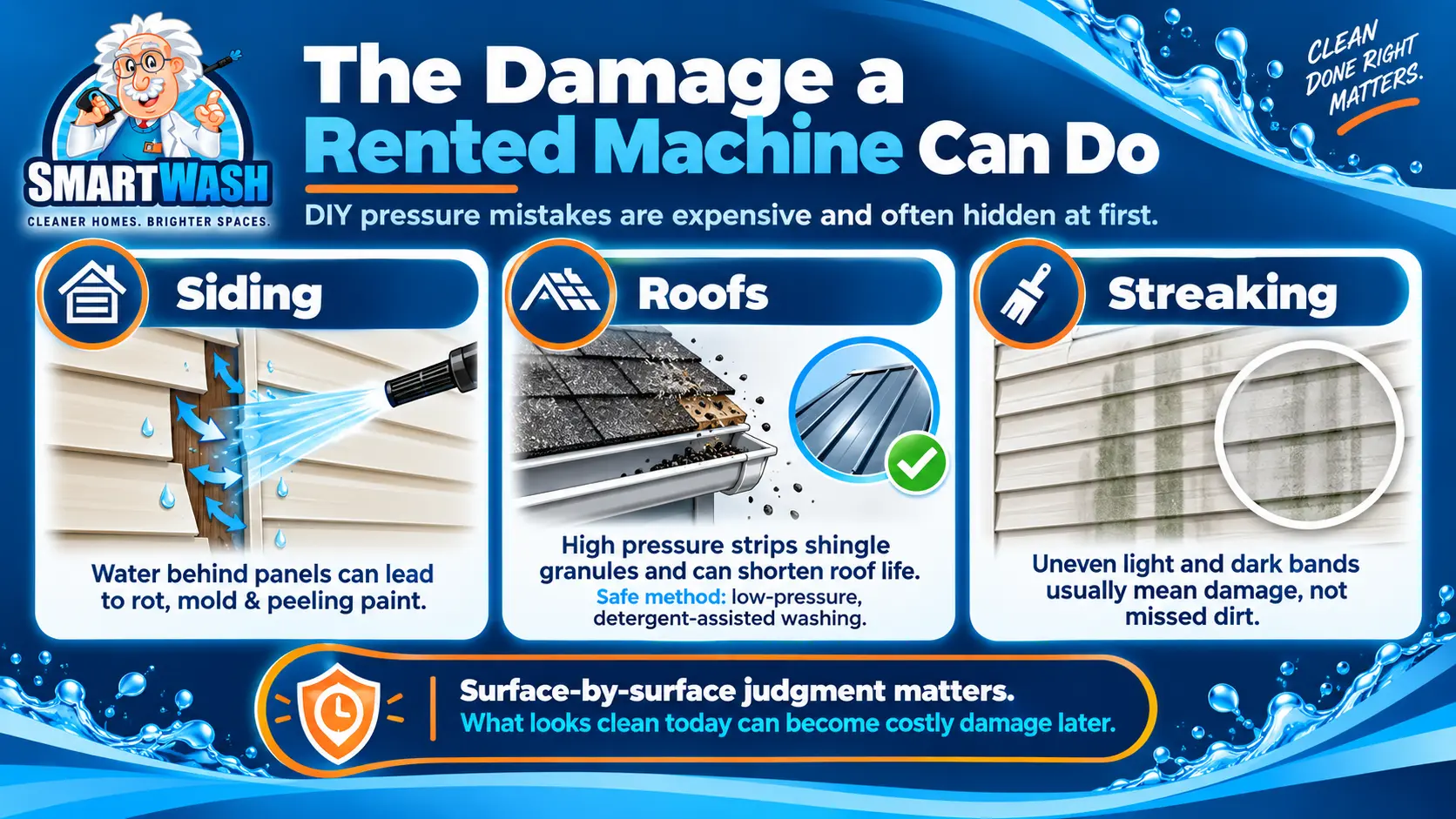
The reason we’re careful about matching pressure to surface is that the mistakes are expensive and often invisible at first. Three failures come up again and again.
- Siding. High pressure forces water behind vinyl and lap-board panels, where it gets trapped and leads to rot, mold, and peeling paint. You often don’t see it for months, until the drywall on the other side of that wall starts to feel soft.
- Roofs. High pressure strips the protective granules off asphalt shingles, which speeds up aging and can void the manufacturer’s warranty. This isn’t just our opinion. GAF, the largest shingle manufacturer in North America, states in its own guidance not to power wash shingles because it can dislodge granules and lead to premature shingle failure, and the Asphalt Roofing Manufacturers Association recommends low-pressure, detergent-assisted washing as the safe method instead. On metal roofs we go a step further and use a weaker, diluted mix with a hand scrub, because strong bleach can damage a metal roof. We learned that the hard way years ago, and it’s exactly the kind of surface-by-surface judgment a rented machine and a how-to video can’t give you.
- Streaking. If siding comes out with uneven light and dark bands after washing, that’s usually damage, not dirt you missed. Blasting it harder only widens the streaks.
We covered more of these traps in our list of seven things you should never do when pressure washing your home. For anything on the roof itself, this is why we handle it as a professional roof cleaning rather than a pressure job.
The Safety Side Nobody Talks About
Cost and damage get most of the attention. The risk that actually sends people to the hospital is the ladder.
The American Academy of Orthopedic Surgeons estimates that roughly 500,000 people are treated for ladder-related injuries in the U.S. each year, and cleaning a two-story home is exactly the setup those numbers come from: working at height, on wet surfaces, holding a hose that kicks back when you pull the trigger. That combination is how a project meant to save a few hundred dollars turns into an emergency room bill.
We clean from ladders with stabilizers and avoid walking on roofs whenever possible. Our high work is handled by two certified technicians with height-specific insurance, on top of $3 million in coverage. None of that helps a homeowner balancing a rented machine on a second-story ladder alone.
What You Can Safely Do Yourself in Knoxville
Plenty of jobs are genuinely fine to handle on your own, and we’d rather tell you that than pretend everything needs a pro.
The sweet spot for DIY
Ground-level hard surfaces are the sweet spot for DIY. A concrete patio, a sidewalk, or a section of driveway is hard to damage, low to the ground, and forgiving if your technique isn’t perfect. Use a wider fan tip, work at a moderate pressure, and you’ll do fine. Outdoor furniture and other low-risk items are easy wins too.
The jobs to hand off
The jobs to hand off are the ones on the house itself or up in the air. Here’s a quick way to sort it:
| Surface or job | Safe to DIY? | Why |
|---|---|---|
| Concrete patio or sidewalk (ground level) | Usually yes | Hard surface, low fall risk, hard to damage |
| Ground-level driveway section | Often yes | Same, at a moderate pressure |
| Outdoor furniture | Yes | Low risk |
| Vinyl, stucco, or painted siding | No, soft wash | High pressure drives water behind panels |
| Roof (any type) | No | Granule loss, warranty risk, fall danger |
| Anything on a second story | No | Ladder and height injury risk |
| Gutters at height | No | Fall risk, and hand-cleaning is safer and more thorough |
One Knoxville catch is worth knowing before you rent a machine for the siding. A surface rinse knocks algae back without killing it at the root, so on our shaded, humid walls it returns with a head start and often looks worse within a month. When it’s time for the house itself, that’s the argument for a proper professional house washing.
Why Professional Results Last Longer Here
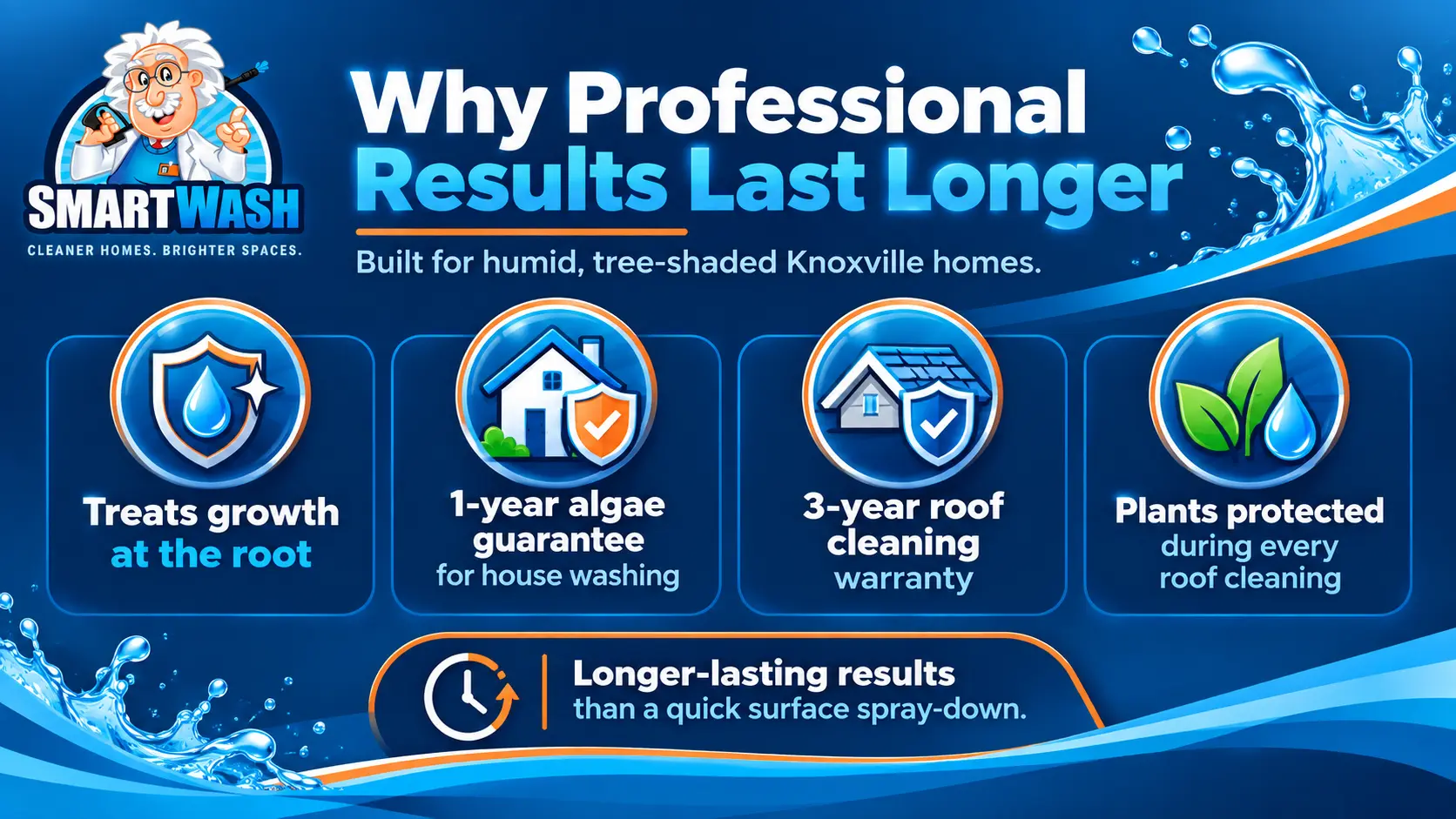
Because a soft wash treats growth at the root instead of rinsing the surface, the results hold up far longer than a quick spray-down. In a humid, tree-shaded market like ours, that head start is the whole game.
We stand behind it, too. Our house washing comes with a one-year algae guarantee, so if algae returns within the year, we come back and re-clean it at no charge. Roofs carry a three-year warranty.
Plant protection is also part of every job. On a roof cleaning, one crew member’s only role is keeping the plants and surroundings wet before, during, and after the work, so nothing green gets scorched by the solution. A homeowner running a rented machine alone can’t clean and protect the landscaping at the same time.
Frequently Asked Questions
Is it cheaper to pressure wash yourself or hire a professional in Knoxville?
For a plain concrete patio, doing it yourself can be cheaper. For a whole house, once you add the rental, the chemicals, a full weekend, and the risk of damaging siding, professional soft washing usually wins on value, with a typical Knoxville house wash averaging around $550.
Do I need to move or cover anything before you arrive?
Just move vehicles out of the driveway and let us know about any sensitive plantings or outdoor pets. We pre-wet and rinse the landscaping ourselves, so you don’t need to tarp or prep the yard before we get there.
Will pressure washing my roof void the warranty?
High-pressure washing can. GAF and the Asphalt Roofing Manufacturers Association both warn against it, so we soft wash roofs at low pressure following those guidelines, which protects both the shingles and the warranty.
What if I already tried it myself and the results look uneven?
Call us and we’ll take a look. Light and dark streaking usually means the surface was cleaned unevenly or the growth wasn’t fully treated, and in most cases a proper soft wash can even it back out.
How often does a Knoxville home need washing?
Most homes here benefit from a house wash about once a year, and sometimes sooner on heavily shaded walls where algae builds up faster. Our guide on how often you should pressure wash your home walks through the signs to watch for.
Ready for a Straight Answer on Your Home?
If you’re not sure whether your job is a DIY afternoon or one to hand off, we’ll tell you honestly. Send us a few details and you’ll get a free, same-day quote with a real number, not an “it depends.” Call us at (865) 383-3622 or request a free quote and we’ll help you get your home clean the right way, without the guesswork or the risk.
